
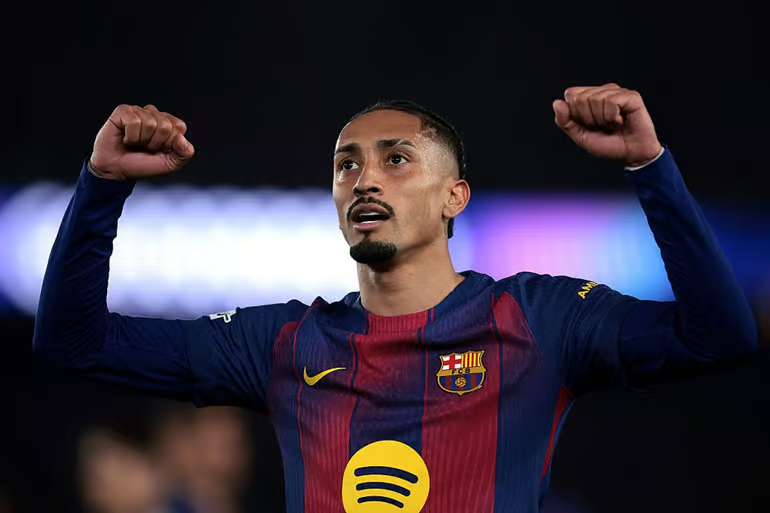
In a night that balanced youthful energy with veteran composure, Barcelona defeated Newcastle United at the Spotify Camp Nou to secure their place in the UEFA Champions League quarter-finals. The Catalan giants, led by the tactical vision of Xavi Hernández, managed to overcome a spirited Newcastle side that refused to go down without a fight. Despite the Magpies’ tactical discipline in the early stages, Barcelona’s clinical efficiency in front of goal ultimately proved to be the deciding factor in this high-stakes European encounter.
Early Dominance Sets the Tone
The match exploded into life within the first twenty minutes. Barcelona’s Fermín López broke the deadlock with a precise finish, followed closely by a quick-fire second from João Cancelo. These early strikes forced Newcastle to abandon their conservative low-block and chase the game. While Newcastle’s Miguel Almirón managed to pull one back before the half-time whistle, providing a glimmer of hope for the traveling Tyneside faithful, the momentum remained firmly with the home side.
Throughout the second half, Barcelona’s midfield—anchored by the creative brilliance of İlkay Gündoğan—dictated the tempo of the game. Newcastle struggled to sustain pressure, and their European campaign was effectively put to rest when Robert Lewandowski scored a decisive third goal late in the match. The veteran striker’s composure in the box was a reminder of why Barcelona remains a top-tier contender on the global stage.
Resilience Meets Reality
For Newcastle United, the exit is a bittersweet conclusion to a journey that saw them compete against Europe’s elite for the first time in two decades. While the defeat is heavy, the experience gained at a stadium as imposing as the Camp Nou is invaluable. For Barcelona, this victory acts as a crucial stabilizer, providing both financial relief and a massive boost in morale as they head into the final eight.
Background & Context: The Global Stakes
This fixture was more than just a football match; it was a collision of two different sporting philosophies. Barcelona represents the established “Old Guard” of European football—a club built on heritage, a specific tactical identity (Tiki-Taka), and global commercial dominance. In contrast, Newcastle United represents the “New Wave,” a club backed by immense strategic investment looking to disrupt the established hierarchy of the Champions League.
In the United States, where the “Soccer” market is rapidly expanding, this matchup drew significant viewership. For American fans, Barcelona’s progression ensures the tournament retains its legendary star power, which is vital for broadcast ratings and sponsorship deals in North America. Moreover, the failure of a Premier League side like Newcastle to overcome the Spanish giants provides a fascinating counter-narrative to the perceived total dominance of English football. As the tournament moves to the quarter-finals, the survival of Barcelona keeps the dream of a historic European title alive for one of the world’s most supported clubs.